
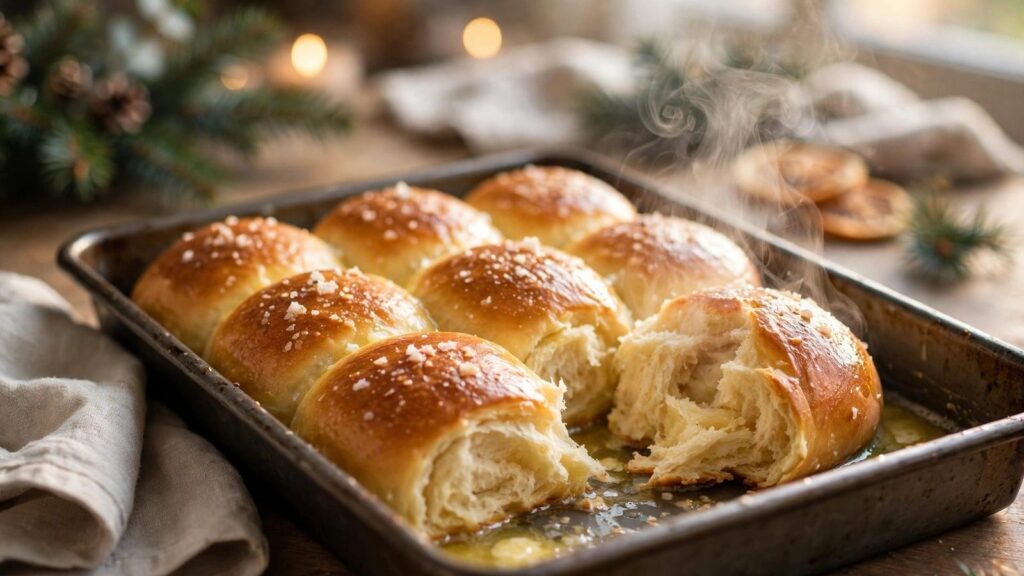
Parker House rolls are the soft, buttery dinner rolls every Thanksgiving table deserves. Each roll is folded in half with melted butter, so it bakes up tall, golden and pull-apart fluffy, with a pocket that opens perfectly for gravy or a slice of turkey.
The dough comes together in about 30 minutes of hands-on work, then needs two rises — about 2 hours in total — and 25 minutes in a hot oven. They are at their best warm from the oven, brushed with butter and sprinkled with flaky salt.
I make these every year because they disappear before the turkey is carved. The fold is the whole trick, and once you have done it once, you will never buy dinner rolls again.
Ingredients
- 4 cups (500 g) bread flour, plus extra for dusting
- 1/3 cup (67 g) granulated sugar
- 2¼ tsp (7 g) instant yeast
- 1½ tsp (9 g) fine salt
- 1 cup (240 ml) whole milk, warmed to 110°F (43°C)
- 1 large egg, at room temperature
- 4 tbsp (57 g) unsalted butter, softened, plus 3 tbsp (43 g) melted butter for brushing
- Flaky sea salt, for sprinkling (optional)
Instructions
- Mix the dough: Whisk the flour, sugar, yeast and salt in a large bowl. Add the warm milk, egg and softened butter and stir until a shaggy dough forms. The milk should feel warm, not hot, or it will kill the yeast.
- Knead: Knead on a lightly floured surface for 8 to 10 minutes, until the dough is smooth, elastic and slightly tacky. It should pass the windowpane test — a small piece stretched thin should not tear. Add milk a teaspoon at a time if the dough feels dry.
- First rise: Shape the dough into a ball, place it in a greased bowl and cover. Let it rise in a warm spot for 1 to 1½ hours, until doubled in size. A turned-off oven with the light on is ideal.
- Shape the rolls: Punch the dough down and roll it out on a floured surface to about ½ inch (1.25 cm) thick. Cut 3-inch (7.5 cm) rounds with a biscuit cutter. Brush each round with melted butter, fold in half, and press the fold firmly with the side of your hand.
- Second rise: Arrange the folded rolls snugly in a buttered 9×13-inch (23×33 cm) baking dish, folded edge up. Cover and let rise for 45 minutes, until puffy and touching. Heat the oven to 375°F (190°C).
- Bake: Brush the tops with melted butter and bake for 22 to 25 minutes, until deeply golden and the internal temperature reaches 190°F (88°C). Brush again with butter and sprinkle with flaky salt as soon as they come out. Serve warm.
Tips for the best result
- Weigh the flour (500 g) — scooping cups can pack in an extra 50 g and make dense rolls.
- If your kitchen is cool, the rises will take longer. Give the dough time; doubling is the cue, not the clock.
- For a richer roll, replace 2 tbsp of the milk with an extra egg yolk.
- Shape the rolls the night before and refrigerate the pan, covered, then rise and bake on the day.
Storing and reheating
Store cooled rolls in an airtight container at room temperature for up to 2 days, or freeze in a sealed bag for up to 1 month. Reheat wrapped in foil at 300°F (150°C) for 10 minutes, or microwave for 15 seconds.
Frequently asked questions
What makes Parker House rolls different from other dinner rolls?
The signature fold is the difference. Each round of dough is folded in half with melted butter, so the roll opens like a pocket and bakes up tall and layered instead of flat. Press the fold firmly with the side of your hand so it holds its shape in the pan.
Can I make Parker House rolls the night before?
Yes. After shaping, cover the pan tightly and refrigerate overnight. The next day, let the rolls rise at room temperature for 45 to 60 minutes until puffy, then bake as directed. This is the easiest way to get fresh rolls on Thanksgiving day.
Why are my Parker House rolls dense instead of fluffy?
Either the dough was too dry or it was under-kneaded. Add the milk a spoonful at a time until the dough is soft and slightly tacky, and knead until it passes the windowpane test — a small piece stretched thin should not tear. Weighing the flour (500 g) is more reliable than scooping cups.
How do I get the tops shiny and golden?
Brushing with melted butter twice, once before baking and once straight out of the oven, gives the tops their shine and rich flavour. A sprinkle of flaky sea salt on top is optional but worth it.
Can I use oat milk instead of whole milk?
Yes, if you do not need a dairy-free version. Use any unsweetened plant milk and a dairy-free butter in the same amounts. The rolls will be a little less rich but still soft and fluffy.


Made this? Tell us how it went