
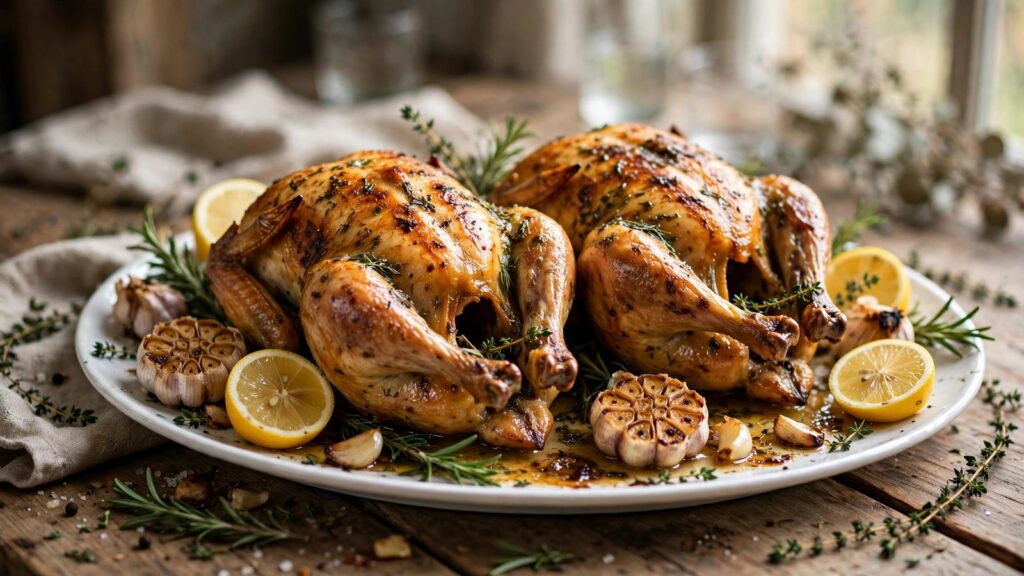
Some years the table is small and a whole turkey is far too much. That is exactly when Cornish hens earn their place: each guest gets their own little golden bird, crisp-skinned and glossy with herb butter, and there is no carving at all.
The trick is compound butter worked under the skin. As it melts it bastes the breast from the inside, so the meat stays juicy while the outside turns deep golden. Lemon, rosemary and thyme do the rest.
These hens look far more elaborate than the 20 minutes of prep they take, which is precisely why they became the viral small-Thanksgiving dinner on TikTok. Serve them straight from the roasting pan with the pan drippings spooned over.
Ingredients
- 2 Cornish game hens (about 700 g / 1½ lb each), giblets removed
- 1 tsp fine sea salt
- ½ tsp black pepper
- 60 g (4 tbsp) unsalted butter, softened
- 3 garlic cloves, finely minced
- 1 tbsp fresh rosemary leaves, finely chopped
- 1 tbsp fresh thyme leaves
- 1 tsp lemon zest
- 1 tbsp olive oil
To stuff and serve
- 1 lemon, quartered
- 4 sprigs fresh rosemary
- 4 sprigs fresh thyme
- 2 garlic cloves, smashed
- Roasted garlic and pan drippings, to serve
Instructions
- Bring to room temperature: Take the hens out of the fridge 30 minutes before cooking. Pat them completely dry inside and out with paper towels, then season the cavities and the outside generously with salt and pepper.
- Make the herb butter: Mash the softened butter with the minced garlic, rosemary, thyme and lemon zest in a small bowl until evenly mixed and fragrant.
- Butter under the skin: Slide your fingers gently under the skin over each breast to loosen it, then spread half the herb butter under the skin of each hen. Rub the rest over the outside of the birds.
- Stuff the cavities: Tuck 2 lemon quarters, a smashed garlic clove and a sprig each of rosemary and thyme into each cavity. Tie the legs together with kitchen string and tuck the wing tips under the body.
- Roast: Heat the oven to 220°C (425°F). Set the hens breast-side up on a rack in a roasting pan, drizzle with the olive oil, and roast for 50–55 minutes without opening the oven for the first 35 minutes, until the skin is deep golden and a thermometer in the thickest part of the thigh reads 74°C (165°F).
- Rest and serve: Rest the hens for 10 minutes so the juices settle. Serve each hen whole on a plate, spooned with the hot pan drippings and the roasted garlic from the pan.
Tips for the best result
- Do not open the oven during the first 35 minutes: the steady high heat is what builds the crisp golden crust.
- Softened, not melted, butter is essential. Melted butter slides off the skin instead of staying under it.
- If the skin browns too fast, tent the hens loosely with foil for the last 10 minutes.
Storing and reheating
Refrigerate leftovers in an airtight container for up to 3 days. Reheat uncovered in a 180°C (350°F) oven for 12–15 minutes so the skin crisps again. Leftover meat is excellent shredded into sandwiches or a grain bowl.
Frequently asked questions
Can I use frozen Cornish hens?
Yes. Thaw them overnight in the fridge, then pat them completely dry inside and out. Wet skin never crisps, so take your time with paper towels.
Can I make this for more than two people?
Yes, it scales directly: one hen per person. Use a larger roasting pan and give each bird space so the hot air can circulate; the cooking time stays about the same.
How do I know the hens are done?
The thickest part of the thigh should read 74°C (165°F) on an instant-read thermometer, and the juices should run clear when you pierce the thigh.
Can I use different herbs?
Absolutely. A mix of rosemary, thyme and sage is the classic trio, but parsley, marjoram or a little tarragon all work. Keep the total amount about the same.




Made this? Tell us how it went