
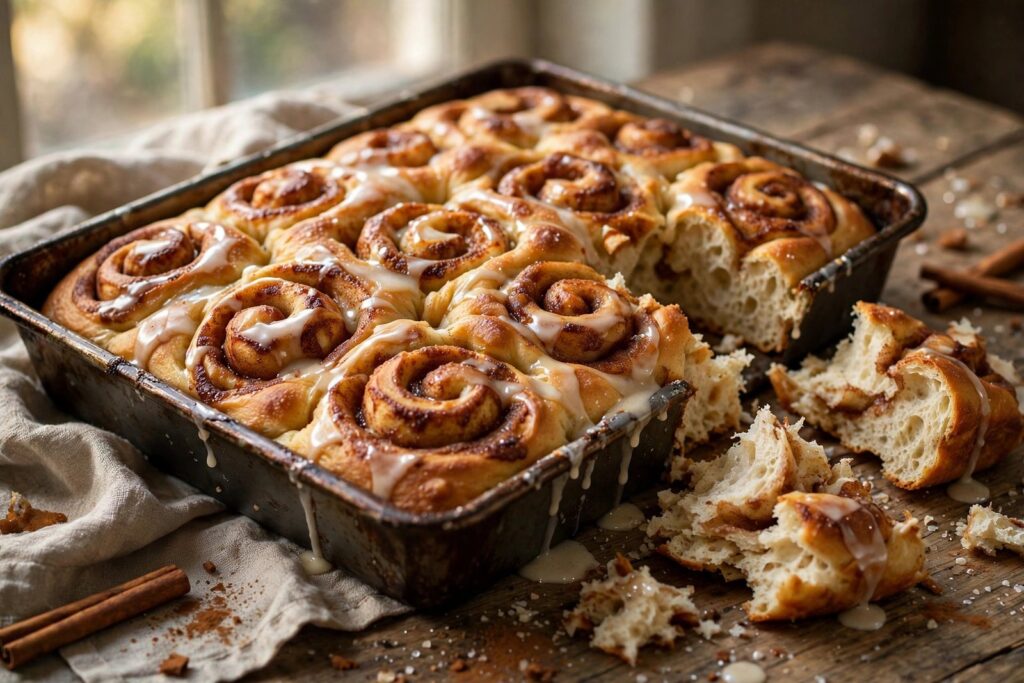
Overnight cinnamon roll focaccia is the easiest way to get bakery-style cinnamon rolls without the rolling, slicing and fuss: a soft, airy focaccia dough swirled with brown sugar and cinnamon, baked until the edges caramelise, then finished with a warm vanilla glaze. Mix the dough tonight and bake it golden tomorrow morning.
The overnight rest in the fridge does the heavy lifting. It deepens the flavour, builds those big open bubbles focaccia is known for, and means the morning work is just dimpling, drizzling butter and baking. I make this the night before a slow weekend morning, and the smell alone gets everyone out of bed.
It slices like bread, pulls apart like monkey bread and tastes exactly like a cinnamon roll. Serve it warm, straight from the pan, while the glaze is still slightly runny.
Ingredients
- 500 g (4 cups) bread flour
- 7 g (2¼ tsp) instant yeast
- 10 g (2 tsp) fine sea salt
- 60 g (¼ cup) granulated sugar
- 360 ml (1½ cups) lukewarm water, about 38°C (100°F)
- 60 ml (¼ cup) olive oil, plus extra for the pan
For the cinnamon swirl
- 115 g (½ cup) unsalted butter, melted
- 150 g (¾ cup) light brown sugar, packed
- 2 tbsp ground cinnamon
- ¼ tsp fine sea salt
For the vanilla glaze
- 120 g (1 cup) icing sugar
- 3 tbsp whole milk
- 1 tsp vanilla extract
Instructions
- Mix the dough: Whisk the flour, yeast, salt and granulated sugar in a large bowl. Pour in the lukewarm water and olive oil and stir with a wooden spoon until no dry flour remains, about 1 minute. The dough will look shaggy and very wet — that is correct.
- Rest and fold: Cover the bowl and rest for 30 minutes, then do one set of stretch and folds, pulling each side of the dough up and over itself. Cover again.
- Cold ferment overnight: Transfer the dough to a lightly oiled container, cover tightly and refrigerate for 12 to 18 hours. It will rise slowly and develop a slightly tangy, yeasty smell.
- Shape the next morning: Oil a 23 x 33 cm (9 x 13 inch) baking pan generously. Tip the cold dough into the pan, drizzle a little more oil over the top and gently press it toward the corners. If it resists, let it rest 10 minutes and press again.
- Add the cinnamon swirl: Stir the melted butter, brown sugar, cinnamon and salt into a thick paste and spread it evenly over the dough, right to the edges. Using oiled fingertips, dimple the dough deeply all over, pressing the cinnamon paste down into the holes.
- Second rise: Cover loosely and leave in a warm spot for 45 to 60 minutes, until puffy and nearly doubled. It should spring back slowly when poked. Meanwhile, heat the oven to 200°C (400°F).
- Bake: Bake for 25 to 30 minutes until deep golden brown and the centre reads 93°C (200°F) on an instant-read thermometer. If the top darkens too fast, cover loosely with foil for the last 10 minutes.
- Glaze and serve: Whisk the icing sugar, milk and vanilla until smooth. Drizzle over the warm focaccia in the pan and serve within 20 minutes, while the glaze is still glossy.
Tips for the best result
- Bread flour gives the chewiest crumb, but plain flour works — the texture will just be a little softer.
- Do not skip the deep dimpling: the holes hold the cinnamon butter so it pools and caramelises instead of sliding off.
- If your kitchen is cold, the second rise can take up to 90 minutes — judge by puffiness, not the clock.
- A metal pan browns the base better than glass; if you only have glass, add 5 minutes to the bake.
Storing and reheating
Best eaten the day it is baked. Wrap leftovers tightly and keep at room temperature for up to 2 days, or refrigerate for up to 4 days. Warm slices in a 160°C (325°F) oven for 8 minutes to revive the soft crumb. Freeze unglazed portions, well wrapped, for up to 2 months.
Frequently asked questions
Can I make cinnamon roll focaccia the same day instead of overnight?
Yes. Let the dough rise at room temperature for 2 to 2½ hours until doubled and bubbly, then shape and continue from step 4. The overnight version tastes better, with a deeper flavour and more open crumb, but the same-day version is still soft and delicious.
Why is my focaccia dough so wet and sticky?
It is meant to be. Focaccia dough is much wetter than bread dough, and that high hydration is what creates the light, open crumb. Resist adding extra flour — wet hands and a little oil make it easy to handle.
Can I use sourdough starter instead of yeast?
Yes, use 100 g (about ½ cup) of active starter and leave out the instant yeast. The bulk ferment will be longer — expect 4 to 6 hours at room temperature before the overnight fridge rest.
How do I know when cinnamon roll focaccia is done?
Look for a deep golden-brown top, edges pulling slightly away from the pan, and a centre temperature of 93°C (200°F). If the top browns before the centre is done, cover loosely with foil.
Can I make it ahead for Christmas morning?
Yes, it is ideal for it. Mix the dough the night before, refrigerate, and bake in the morning — it needs about 45 minutes to rise plus 30 minutes to bake, so start about 1½ hours before you want to eat.






Made this? Tell us how it went