
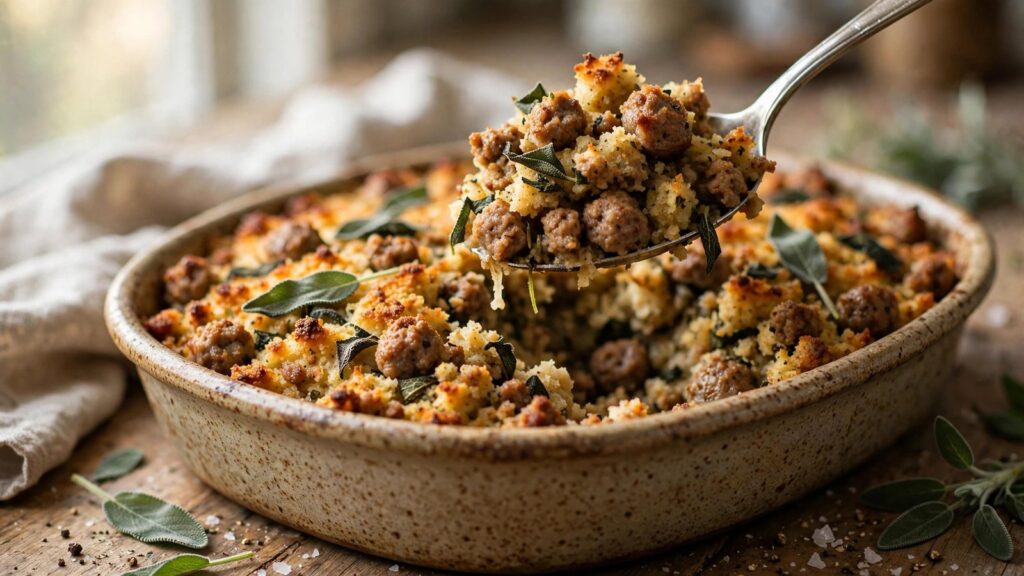
Classic sage and sausage stuffing is the Thanksgiving side that disappears first: buttery bread cubes with crisp, golden edges, savoury pork sausage, and plenty of fresh sage, baked until the top crackles and the centre stays soft. It takes about 20 minutes of hands-on work and an hour in the oven.
The trick is stale bread and real stock. Dry bread soaks up the buttery sausage drippings without turning to mush, and a good chicken stock keeps every bite moist. I use a mix of crusty white bread and a little cornbread when I have it, but plain white bread works beautifully on its own.
This is the stuffing I make every year, and it scales easily — double it for a crowd, or bake it in a smaller dish the night before and reheat it while the turkey rests.
Ingredients
- 450 g (1 lb) pork sausage, casings removed
- 1 large loaf (about 700 g / 24 oz) day-old crusty white bread, cut into 2 cm (¾ inch) cubes
- 60 g (4 tbsp) unsalted butter, plus extra for the dish
- 2 medium onions (about 300 g / 10 oz), finely diced
- 3 celery stalks (about 150 g / 5 oz), finely diced
- 3 garlic cloves, minced
- 2 tbsp chopped fresh sage leaves
- 1 tbsp chopped fresh thyme leaves
- 1 tsp fine sea salt
- ½ tsp black pepper
- ¼ tsp ground nutmeg
- 2 large eggs, beaten
- 500 ml (2 cups) low-sodium chicken stock, plus more if needed
To finish
- Small sage leaves and a knob of butter, to top
Instructions
- Dry the bread: Spread the bread cubes on a baking tray and bake at 150°C (300°F) for 15 minutes until dry and lightly crisp at the edges, or leave them out overnight. They should feel dry to the touch, not soft.
- Brown the sausage: Heat a large skillet over medium-high heat and cook the sausage, breaking it into small crumbles, for 8–10 minutes until browned and cooked through. Lift it out with a slotted spoon and leave the fat in the pan.
- Soften the vegetables: Melt the butter in the same pan over medium heat. Add the onion and celery with a pinch of salt and cook for 8 minutes until soft and translucent. Stir in the garlic, sage and thyme and cook for 1 minute more, until fragrant.
- Combine: Tip the dried bread into a large bowl. Add the sausage, the onion mixture, salt, pepper and nutmeg, and toss so everything is evenly mixed.
- Moisten: Whisk the eggs into the stock, then pour it over the bread in two batches, tossing gently between pours. The bread should be evenly damp and hold together when squeezed, not soggy — add a splash more stock if any cubes still look dry.
- Bake: Butter a 23 x 33 cm (9 x 13 inch) baking dish, pile in the stuffing, dot with small sage leaves and butter, and cover tightly with foil. Bake at 190°C (375°F) for 30 minutes, then remove the foil and bake 20–25 minutes more until the top is deep golden and crisp.
Tips for the best result
- Stale bread is essential — fresh bread soaks up too much liquid and turns gummy. If your loaf is fresh, dry it in the oven as in step 1.
- For a stuffing baked inside the turkey, reduce the stock by 60 ml (¼ cup) and pack it loosely so heat can reach the centre; it must reach 74°C (165°F).
- Swap half the sausage for chopped mushrooms if you want a lighter version, or use a spicy Italian sausage for extra heat.
- Do not overmix once the stock goes in — gentle tossing keeps the cubes distinct instead of turning them into paste.
Storing and reheating
Cool completely, then refrigerate in a covered dish for up to 4 days or freeze for up to 3 months. Reheat covered at 175°C (350°F) for 20 minutes, then uncovered for 10 minutes to crisp the top again, adding a splash of stock if it looks dry.
Frequently asked questions
Can I make sage and sausage stuffing ahead of time?
Yes. Assemble it up to a day ahead, cover and refrigerate, then bake as directed, adding 10 minutes to the covered baking time. For best texture, bake it the same day if you can.
What bread is best for stuffing?
A sturdy day-old white loaf is best, because it holds its shape when moistened. Avoid soft sandwich bread, which collapses, and avoid heavily seeded loaves, which change the flavour.
How do I keep stuffing from getting soggy?
Dry the bread cubes first, add the stock gradually, and stop when the bread is damp but not wet. Baking uncovered for the last 20 minutes also drives off excess moisture and crisps the top.
Can I make this stuffing without sausage?
Yes. Leave out the sausage and add 250 g (8 oz) of chopped mushrooms, browned in butter, plus an extra tablespoon of butter for richness. The sage and stock still give it a full, savoury flavour.
How much stuffing do I need per person?
Plan on about 150 g (roughly 1 cup) per person. This recipe serves 8 as a side; for a crowd of 12 to 14, make a double batch in two dishes rather than one very deep one, so it cooks evenly.





Made this? Tell us how it went